A Greener Practice
Raison Opticians ~ A Greener Practice
Environmental Impact Reduction at Raison Opticians
At Raison Opticians, we believe that looking after people’s eyes and looking after the environment can go hand in hand.
We’re continually looking at ways to reduce the environmental impact of our business — from the frames and lenses we choose, to the way we communicate with customers and deal with waste. We know there is always more we can do, so this is an ongoing project rather than a finished list.
We’re also keen to hear from our customers. If you have an idea that could help us reduce our environmental impact, please get in touch.
Here is a summary of what we’ve done so far and what we’re planning to do next:
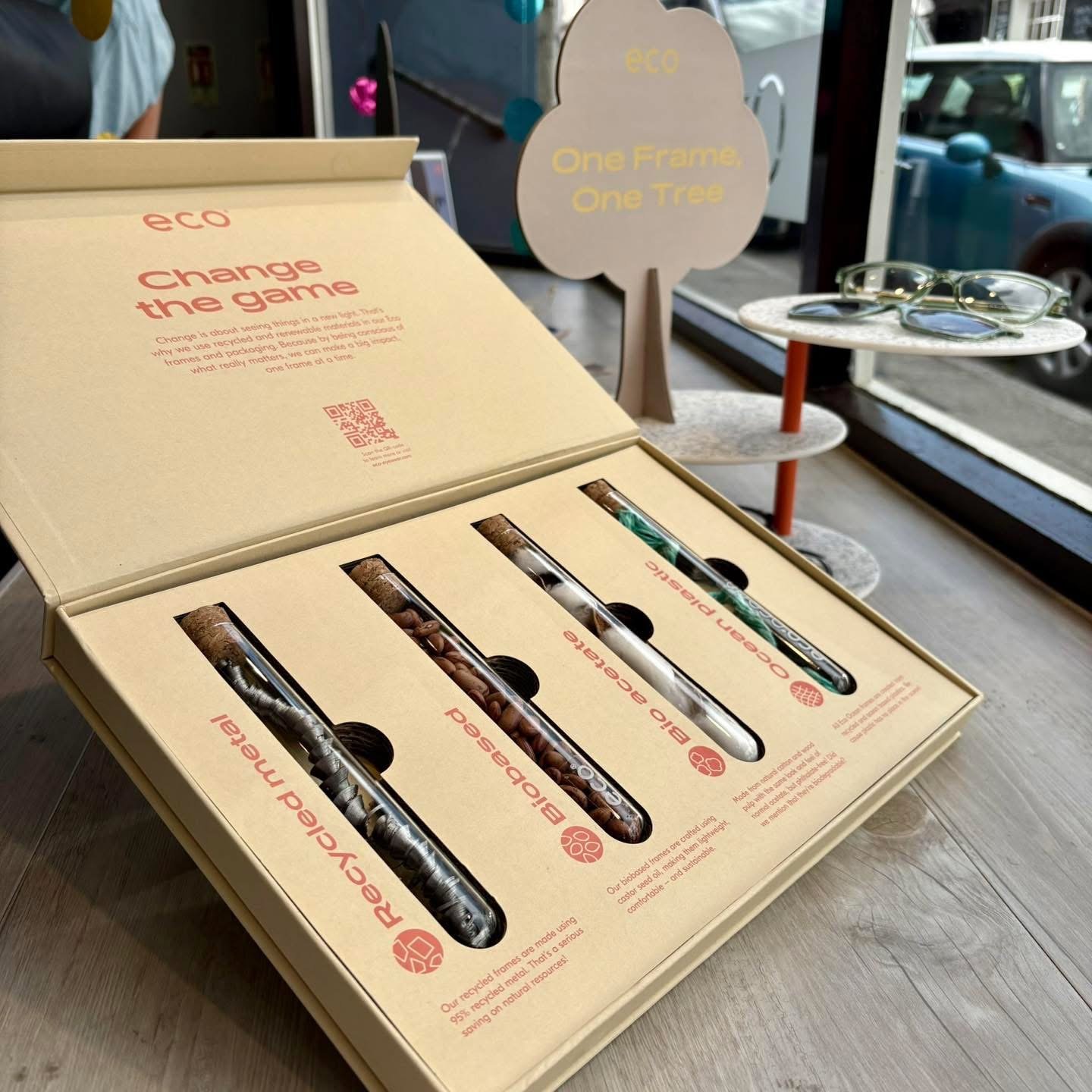
Choosing frames made from recycled materials
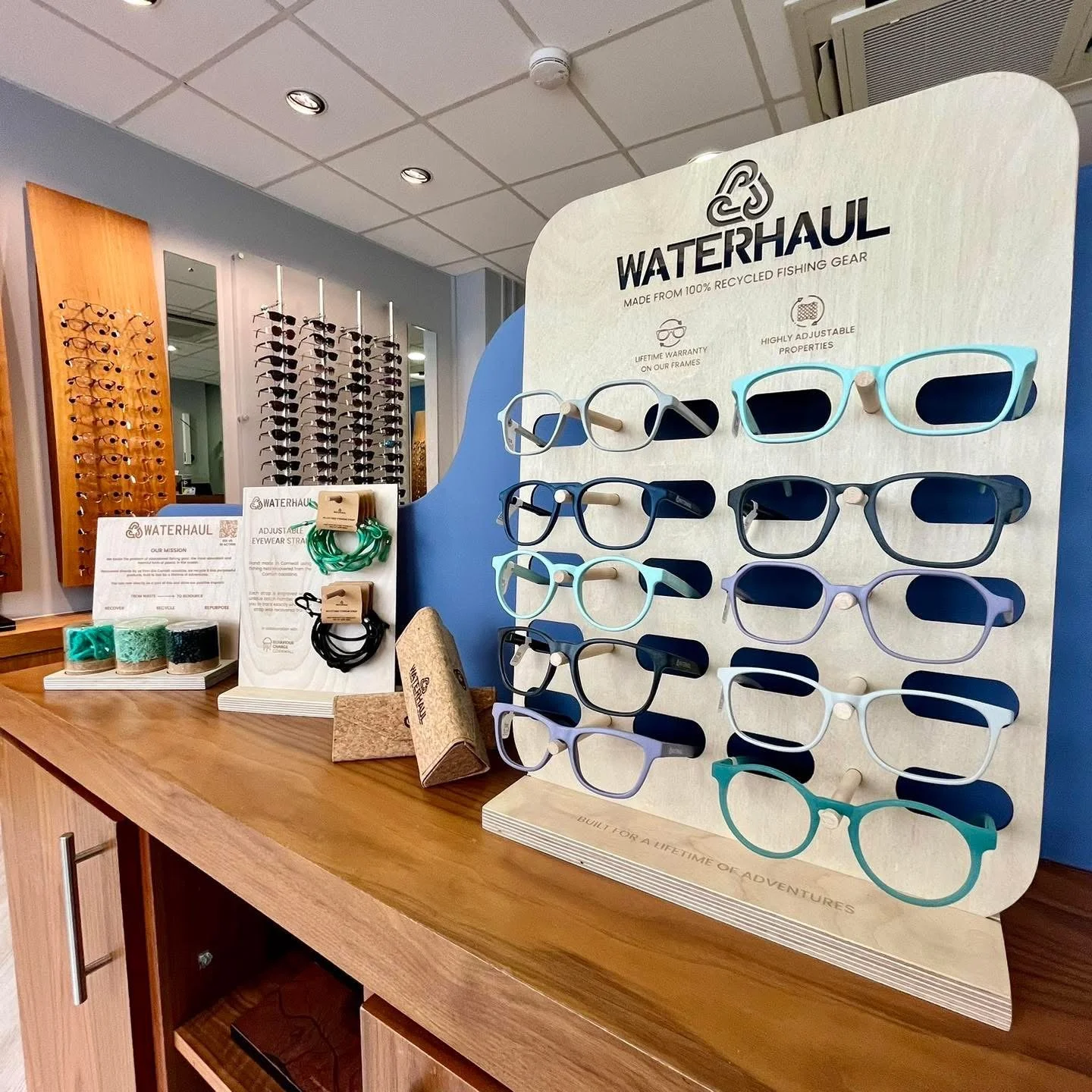
We stock frames and eyewear straps from Waterhaul, a Cornwall-based company that recovers discarded fishing gear and marine plastics and turns them into useful new products.
Some Waterhaul frames are made from 100% recycled fishing nets and lines recovered from the UK coastline. Their eyewear straps are also made using recovered fishing nets collected from the Cornish coast.
We particularly like the fact that this gives waste material a new life while supporting a business working to tackle marine plastic pollution.
Choosing Nikon Lenswear
We choose Nikon Lenswear with sustainability in mind, alongside the quality and optical performance of their lenses.
Nikon says that large quantities of water are used in optical lens production, particularly during polishing. Its environmental programme includes reducing freshwater consumption and reusing and recycling water. Nikon’s sustainability reporting specifically says it aims to promote the “3Rs” of water: reduce consumption, recycle and reuse water.
Reglazing your existing glasses
One of the simplest ways to reduce waste is to keep using something you already own.
At Raison, we can often reglaze your existing frames, replacing the lenses while keeping the frame. This means you don't necessarily need to buy a completely new pair of glasses when your prescription changes.
As well as reducing material waste, reglazing can sometimes be a more economical option for our customers.
If you have an old pair of frames you still like, ask us whether they can be reglazed.
Giving old spectacles a second life
We encourage customers to bring their unwanted spectacles to us so that they can be passed on through the Lions Clubs' spectacle recycling scheme.
Lions volunteers sort and grade donated spectacles, with suitable glasses sent on for use by people who need them in other countries.
All the spectacles sent to the Lions are sorted by a team of volunteers in our recycling centres. They are then graded and shipped to many countries around the world where they are needed.
Spectacles that cannot be reused are recycled to enable us to give financial support to eye related projects in the UK and overseas.
So please don't leave your old glasses in a drawer — bring them into Raison and we'll make sure they are given the best possible next use.
Recycling our dummy lenses
The clear dummy lenses used in our frame samples don't need to go to waste either.
These are returned by the labs and we send them to One Blue Eye, a Helston-based business that turns recycled plastic waste into new products.
Reducing paper and unnecessary post
We try to keep our communication with customers as paper-free as possible.
Letters are only sent when necessary. Email and text messages are our standard ways of letting you know when your eye examination is due or reminding you about an appointment.
We also operate a paperless office. The main exception is printing customers' prescriptions, where this is required by law.
What we're working on next
Reducing our environmental impact is a journey, and there are several areas where we want to do better.
Looking at ethical banking
We're investigating whether we can move our business banking to an institution with stronger ethical and environmental policies.
Where we keep our money matters. We want to understand how banks use the money entrusted to them and whether our banking arrangements align with our values, including around fossil fuels, tobacco, arms and poor labour practices.
We're currently researching the options and will share an update when we've made a decision.
It's a small change, but one that can be made without changing the way we work.